
Increased input costs due to geopolitical conflict in West Asia and unseasonal rain in March negatively impacted volumes of consumer durables makers, particularly air conditioners, in Q4FY26, leading to projected declines in EBITDA and APAT despite revenue growth.

In the present hyper-connected world, there are many domestic and global factors that affect financial markets. Of them, the most powerful and often least predictable are geopolitical events, which often boil down to one diplomatic headline.

Silver prices surged by Rs 11,800 to Rs 2.57 lakh per kg and gold advanced by Rs 3,000 to Rs 1.58 lakh per 10 grams in the national capital, driven by fresh buying from jewellers and stockists ahead of Akshaya Tritiya.

West Asia conflict triggers sharp sell-off in Indian markets, with realty, banking and auto stocks leading losses amid energy shock fears.

The Indian rupee gained 2 paise to settle at 93.33 against the US dollar, driven by positive sentiment in domestic equity markets and renewed hopes for US-Iran talks, despite rising WPI and CPI inflation.

The Indian rupee depreciated by 52 paise to settle at 93.35 against the US dollar, driven by failed US-Iran peace talks, surging crude oil prices due to a potential US blockade of Iranian ports, and a global flight to the greenback. This geopolitical uncertainty is also leading to foreign capital withdrawal from domestic equities.

Gold prices are expected to remain volatile next week as investors track geopolitical developments in the Middle East and key macroeconomic data releases that could shape the sentiment in the domestic market, analysts said.
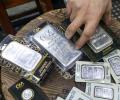
Silver prices surged on Monday to breach the record Rs 3 lakh-per-kg mark in futures trade for the first time, riding on strong investor demand and positive global trends.

"It is quite possible that the rates will remain low in the near to medium term, but that will depend on how conditions evolve," said RBI Governor Sanjay Malhotra.

Prime Minister Narendra Modi convened the Cabinet Committee on Security to address the impact of the West Asia conflict on Indian citizens, focusing on safeguarding them from the conflict's effects and ensuring the smooth flow of essential supplies.

Using a trading terminal is not suitable for all market participants. Before market participants start using a trading terminal, it is important for them to know who really needs a trading terminal and what they can do with it. Here, we will explore who should actually use a trading terminal.

India has emerged as the most impacted market within emerging economies, experiencing $3.7 billion in outflows over the past three weeks, matching the total outflows from the entire emerging market basket, as global equity funds turn negative for the first time since January 2026 due to escalating geopolitical tensions.

Delhi Police arrested a gas agency owner for allegedly hoarding and black marketing LPG cylinders, seizing 459 cylinders in a raid.

FMCG major Hindustan Unilever Ltd (HUL) reported a 21 per cent increase in its March quarter consolidated net profit, reaching Rs 2,994 crore, primarily driven by higher volumes and a significant gain from the divestment of its stake in Nutritionalab.
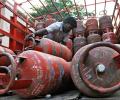
Delhi Police arrested three men in Mahipalpur for illegally hoarding LPG cylinders and selling them at inflated prices. The raid uncovered a large number of domestic and commercial cylinders, along with refilling equipment.

As the rupee has been on a downward slide and crossed 90 a dollar, consumer electronics firms are looking to raise prices of products ranging from air conditioners (ACs) to television panels up to 10 per cent.

The downgraded World Bank forecast follows a similar move by the International Monetary Fund, which cut its growth forecasts two months ago

Barack Obama's re-election as the President of the United States has proved favourable for commodities markets amid hope that the recently announced third round of quantitative easing (QE3) for brining liquidity into the financial system would continue in future as well.

'Mobius made EMs investable and India his most enduring belief.'

Analysts warn that global markets are significantly underpricing the risk of an oil price shock, with Brent crude potentially soaring to $150 per barrel if the West Asia conflict escalates or damages critical oil and gas infrastructure. This could lead to severe inflation and economic repercussions, particularly for import-dependent nations like India.

The benchmark BSE Sensex's trailing 12-month price-to-earnings (P/E) multiple has declined to 20.2x, its lowest since May 2020, driven by a record $42 billion FPI selloff since September 2024 and concerns over corporate earnings and economic growth.

Trinamool Congress leader Abhishek Banerjee criticised the BJP over the proposed Uniform Civil Code and the delay in recognising the Kurmali language, accusing the party of dividing people and making false promises.

The OECD projects India's GDP to grow at 7.6% in the current fiscal year and 6.1% in 2026-27, despite global economic challenges stemming from the Middle East conflict and energy price volatility.

The Indian trading and investment space has transformed exponentially in the last few years, and technology plays a pivotal part in how traders engage with the markets. In 2026, brokers are far more than order-execution platforms; they provide several value-added features to market participants to facilitate a data-driven and seamless trading experience.

Godrej Consumer Products Ltd (GCPL) delivered a robust Q4FY26 performance, with steady demand in India and signs of stabilisation in international markets, despite persistent inflationary pressures. The company expects to maintain profitability in FY27 through strategic cost management and pricing adjustments.

The Indian government is considering additional relief packages for vulnerable sectors like MSMEs to mitigate the impact of the ongoing West Asia crisis on the economy and inflation.
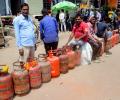
The Indian government has implemented several measures to mitigate external risks, support the balance of payments, and maintain macroeconomic stability amidst the ongoing West Asia crisis, according to Minister of State for Finance Pankaj Chaudhary.

The Indian rupee depreciated significantly against the US dollar, reaching a new all-time low due to rising oil prices, a strong dollar, and ongoing geopolitical concerns. Domestic equity market declines and foreign investment outflows further contributed to the rupee's weakness.

Indian markets on Dalal Street rallied sharply as easing tensions in the US-Iran conflict and stable oil prices boosted sentiment. Track Nifty 50 and BSE Sensex performance and key global triggers.

TMC leader Abhishek Banerjee accuses the BJP of attempting to alter West Bengal's demography by importing voters from other states ahead of the 2026 assembly elections, alleging a conspiracy to undermine the democratic rights of local residents.

AIADMK general secretary Edappadi K Palaniswami has announced a series of welfare measures, including free refrigerators for rice ration cardholders, if the party wins the 2026 Assembly election in Tamil Nadu.
Delhi Police have dismantled multiple illegal LPG storage and refilling units across the city, seizing a large number of cylinders and apprehending several individuals involved in the illicit operations.

The government has sharply reduced excise duty on petrol to 3 and diesel to zero, offering major relief to consumers. Here's how the price cut will impact fuel rates and inflation.
Crude oil is not the only commodity seeing a price correction on fears of an economic slowdown. The same sentiment is driving prices of a range of important industrial metals like copper, zinc, aluminum and the precious metal gold. As a result, prices are now below what they were three months ago.
The rupee appreciated 13 paise to close at 90.34 against the US dollar on Thursday, on trade deal optimism and overnight decline in commodity prices, even as the upside remained capped as investors look for more clarity on the India-US trade deal.
Delhi Police have registered multiple FIRs and seized hundreds of LPG cylinders in a crackdown on illegal storage, refilling, and black marketing operations amid concerns of potential supply shortages.

Gold prices surged in futures trading due to escalating US-Iran tensions, driving demand for the safe-haven asset.

Indian markets on Dalal Street rallied sharply as easing tensions in the US-Iran conflict and stable oil prices boosted sentiment. Track Nifty 50 and BSE Sensex performance and key global triggers.

Sitharaman continues with the tradition she set in 2019, carrying the budget speech in a 'bahi-khata', which she used after dropping the briefcase tradition.
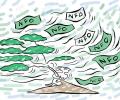
Uncertainty stemming from the US-Iran conflict has significantly impacted India's mutual fund industry, leading to a sharp decline in new fund offers (NFOs) in March, despite numerous regulatory approvals. This geopolitical tension, coupled with existing market strain and distributor hesitation, has dampened investor sentiment and affected overall inflows.
